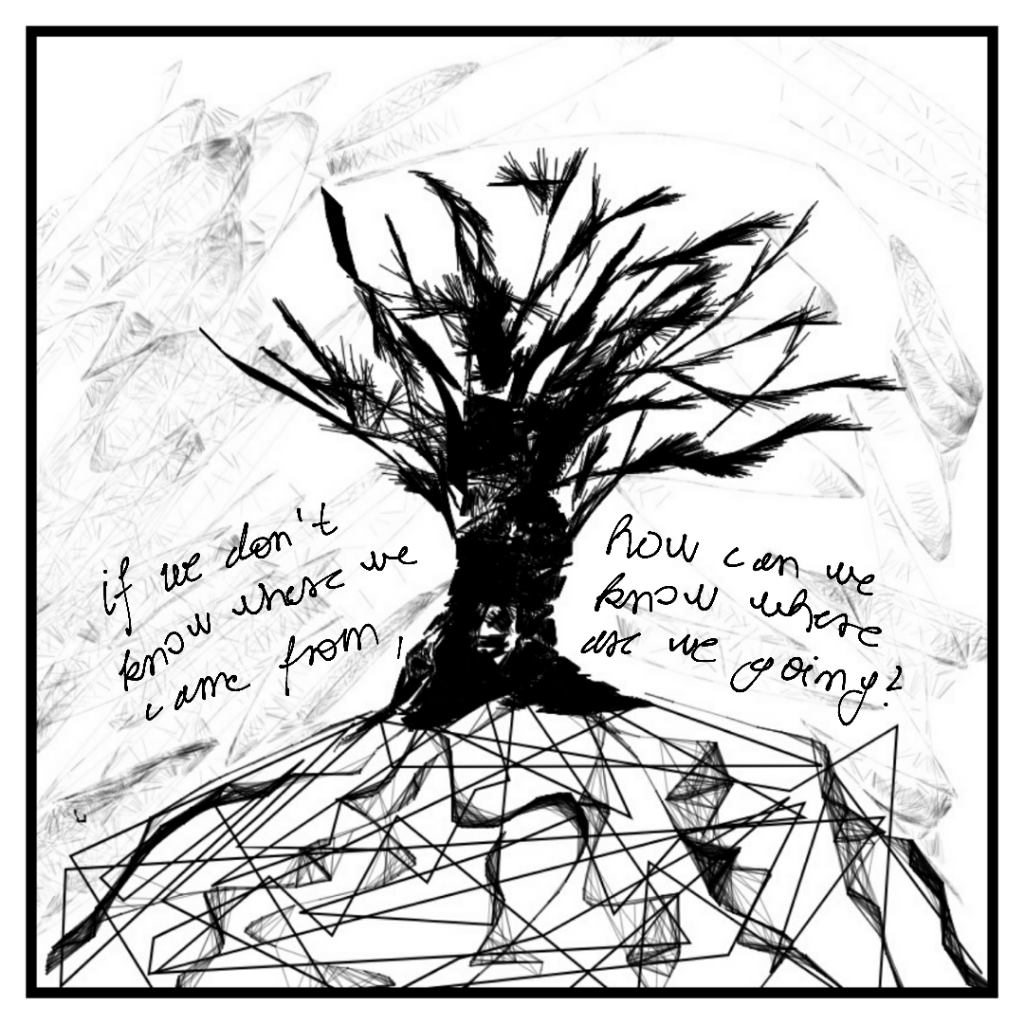
BACK TO THE ROOTS, BACK TO THE FUTURE - ERASMUS+

BACK TO THE ROOTS, BACK TO THE FUTURE - ERASMUS+

Monday, December 2, 2019

Xmas Wishes Padlet

Our Team created a Xmas Wishes Padlet. Students, Teachers and Parents are able now to share their Xmas wishes!

animated-christmas-tree-image-0337

You can share  your wishes, too :

https://padlet.com/eleferasmus2019/ujrxtp5a46p7

Friday, November 29, 2019

1st PROJECT MEETING - 24-30 NOVEMBER 2019 - ELEFTHEROUPOLIS-KAVALA-GREECE

Two short videos  created by Ornella Carlino, a colleague of the Italian Team. Photos were shut during their stay and visit in Eleftheroupolis and Kavala, East Macedonia and Thrace Region, in Greece from 24th until 30th of November 2019.


https://www.youtube.com/watch?v=L6Z15G55nYo&feature=youtu.be


https://www.youtube.com/watch?v=tjGtk4KdLN0

Wednesday, November 20, 2019

PRESENTATION OF THE HOSTING CITY AND COUNTRY

KAVALA, CROSSROADS OF CIVILISATIONS
Neapolis, Christoupolis, Kavala
With a history carved in the stone and the sea, the “apple of discord” of conquerors, and flooded with the fragrances of trade from West and East, Kavala stands proudly in Northern Greece with its authentic beauty.


Kavala is a city in northern Greece, a principal seaport  and the capital of Kavala regional unit. The unique indigenous population, the Aromanians, name it Cavala. The etymology of the modern name of the city is disputed. Some mention an ancient Greek village Skavala near the town. Others propose that the name is derived from the Italian cavallo which means horse. The city's nickname is "the cyan city" (Η γαλάζια πόλη) and its symbol the ancient ship.
Its geographical location, its natural port and its adjacency with gold-bearing Mt Pangaion make Kavala one of the oldest coastal towns, with its traces being lost in the mists of prehistory.


    The city was founded in the late 7th century BC by settlers from Thassos. It was one of several Thassian colonies along the coastline, all founded in order to take advantage of rich gold and silver mines, especially those located in the nearby Pangaion mountain (which were eventually exploited by Phillip II of Macedonia).
Worship of Parthenos / the Virgin, a female deity of Greek–Ionian origin associated with Athena, is archaeologically attested in the Archaic period. At the end of the 6th century BC Neapolis claimed independence from Thassos and began issuing its own silver coins with the head of Gorgo on one side. A few decades later a large Ionic temple made from Thassian marble replaced the Archaic one. Parts of it can now be seen in the town's archaeological museum.
In 411 BC, during the Peloponnesian War, Neapolis was besieged by the allied armies of the Spartans and the Thassians, but remained faithful to Athens. Two Athenian honorary decrees in 410 and 407 BC rewarded Neapolis for its loyalty.
Neapolis was a town of Macedonia, located 14 km (9 mi) from the harbour of Philippi. It was a member of the Second Athenian League; a pillar found in Athens mentions the contribution of Neapolis to the alliance.


 It became a Roman civitas in 168 BC, and was a base for Brutus and Cassius in 42 BC, before their defeat in the Battle of Philippi. Given the historical fact that the city is situated on the famous Ancient route Via Egnatia and the inhabitants were the retired Roman legionnaires and their families, one may understand that Cavala designated 'the Horses" (cavalla) - as there was a Roman fortress with a "post" where Imperial couriers had rest and changed the horses.


. It was to this town that the Apostle Paul came to teach the message of Christianity for the first time in Europe in 49 AD, and baptised Lydia, the first European Christian woman, on the banks of the River Zygaktis.
In the 6th century, Byzantine emperor Justinian I, a descendant of a Romanised noble Thracian familly (see Aromanians), fortified the city in an effort to protect it from barbarian raids. In later Byzantine times the city was called Christoupolis ( "city of Christ") and belonged to the theme of Macedonia.


During the Ottoman period, the town was razed to the ground, to be reborn from its ashes and, from the 18th century, once again became an important commercial port, acquiring its current, modern appearance. Until 1864, the Old Town was confined to the triangular peninsula on Kavala hill, which was itself a continuation of ancient Neapolis and Byzantine Christoupolis. Within this same space, the same city appeared in different eras, and with different names.
It is situated on the Bay of Kavala, across from the island of Thasos and on the Egnatia motorway, a one-and-a-half-hour drive to Thessaloniki (160 kilometres) and a forty-minute drive to Drama (37 km) and Xanthi (56 km). It is also about 150 kilometers west of Alexandroupoli.

GREECE


Tuesday, November 12, 2019

RESULTS OF THE LOGO CONTEST

More than 400 students  voted in the Logo contest organised by Gianina Butescu , member of the Romanian Team. All participants created beautiful, artsistic Logos. ... Here are the results: 
And the winner is: ...

Thursday, October 24, 2019

Sunday, October 13, 2019

ERASMUS CORNER - GYMNASIUM ELEFTHEROUPOLIS

Students' creativity and imagination trasformed an empty dashboard to an awesome eTwinning Corner!


Monday, October 7, 2019

TRAVELLING TO KAVALA

TRAVELLING TO KAVALA


By plane 

From Athens, there are daily flights to “Megas Alexandros” Airport in Chrysoupoli, just over 30 km from Kavala. In the summer, this airport serves charter flights to and from many European cities.
The airport is also connected to the town of Kavala with a regular bus service. The bus stop is just outside the airport building and tickets can be purchased from the driver. 

Address:  Nea Karvali provincial road, 64200,  Chrysoupoli, Greece

Telephone:  +30 25910 53270-3


By bus

There are regular connections with KTEL buses to and from Thessaloniki and Athens as well as to other nearby towns. The completion of the Via Egnatia has reduced the distances while the road network throughout the whole Regional Unit is generally good.

Address: 4 Mitropolitou Chrysostomou St., 65403, Kavala,  Greece

Telephone:  +30 2510 222294, +30 2510 223593

Kavala KTEL in Athens:  +30 210 5129407 

Kavala KTEL in Thessaloniki:  +30 2310 595422

Website:  www.ktelkavalas.gr

Email:  info@ktelkavalas.gr


By car

You will arrive by train in Thessaloniki, Drama or Xanthi and can continue from there by car for Kavala. For timetables, fares, journey times and further information call 14511or 1110 (recorded information), or visit the TRAINOSE website at www.trainose.gr.


At your service

   The Tourist Information Centre is located at a central point in the town, in Eleftherias Square. Its purpose is to offer any kind of information that is needed for your visit and stay in Kavala!

   The region of Kavala offers the visitor a wide range of choices, such as visits to sights, contact with nature, entertainment and recreation, food and shopping.

   The Tourist Information Centre can give you full and clear guidelines on how to comfortably plan an itinerary of your choosing.
   Are you planning a professional journey? Are you on vacation? Are you in the mood for alternative activities? Would you like to go on a family trip for a few days? Are you on your honeymoon? Would you like to go for a swim in the town beaches or choose among the options for an evening out? The answers to your questions can all be found at the Tourist Information Centre, where you can:
  • Request information (in Greek, English, or German) on the points that interest you in the region, the sights, monuments, museums and coasts, as well as information on accommodation, dining, proposed routes, etc.   
  • Get free information leaflets, such as a map of the town centre.
  • Buy souvenirs and books.
  • Book rooms.
  • Use the “e-corner”, and buy tickets for cultural events at the ticket booth.

We hope you enjoy your visit!


Useful information:
Address:  Ionos Dragoumi & El. Venizelou St Eleftherias Square, 65302, Kavala, Greece
Telephone:  +30 2510 231011
Opening hours:
Winter opening hours Monday to Saturday: 08:00-20:30
Summer opening hours Monday to Saturday: 08:00-21:00
Email:   touristinfo@kavalagreece.gr


Web 2.0 Tools

Project Activities with Web 2.0 Tools Digital Storytelling with Storybird: A video created by the students of Eleftheroupolis Gtmnasium ab...